

Culture
Not Just the Rhyme

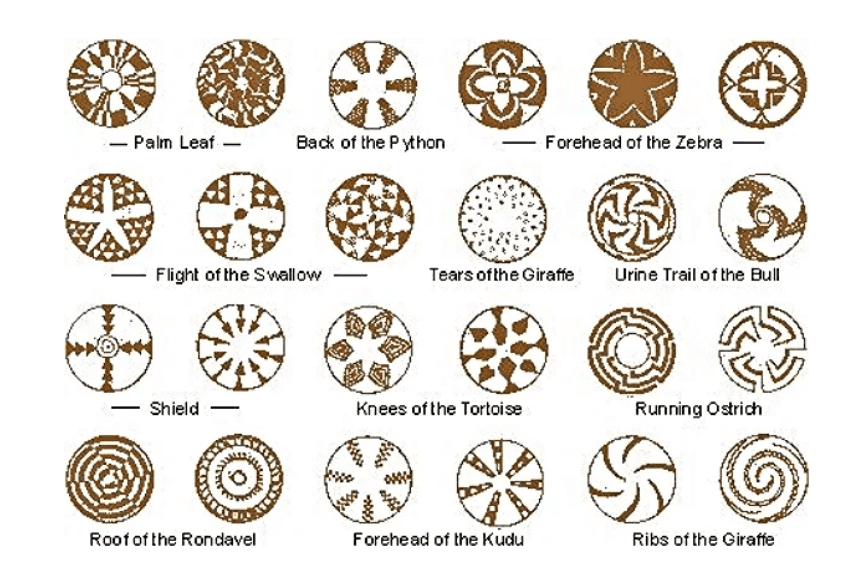
A few articles ago in, Of Baskets & Symbolism , I promised a follow up on the history of the basket weaving behind the Hambukushu women’s artistry. I couldn’t have anticipated the difficulty of writing what I envisioned. Because of the internet, I took it for granted that finding that information will not be. It’s true that no one is holding a whip over my head. But somewhere along the way, I gave in to the process of both story and meaning making. So this is a case of a behind the story-story.
Time and again when I deeply think about the process of creativity, I surprise myself at how I come up short with words. All I end up with is a picture, isn’t that ironic? The writer that can’t describe writing. I imagine an endless roll of time that circles over unto itself, coiling through the centuries. Not unlike this story about basketry and symbolism that humans engage in to mark their time here on Earth.
With the start of a story, I often don’t know where it’ll take me. Below is a mental conversation with self. How I love these trips!
“Why am I justifying this basket trail I’m on like a hound with a scent?
Because it’s the only feminine cultural thing I strongly identify with.
I don’t know. Maybe because I’m trying to stop using nail polish as my feminine thing.
But why do I need a cultural thing to identify with? Or any feminine thing?
How can it be your cultural thing? You’re not even a Mbukushu?
Does it matter much… isn’t it enough that I’m human?”
“By the way…why is there ‘being’ in the human phrase?”
And this is where I killed that trip and where it was heading! Back to the main story.
The history of human’s making baskets is probably as old as the earliest of stories about the beginning of creation. It’s not really clear where the craft of basketry began and the routes it took to be as widespread as it now is. It is, however generally agreed upon, that it came before pottery. And it makes sense, that to learn skills that helped in the food department took on a more urgent need. What I found across the internet is scattered and kind of piecemeal information about the people that migrated from the regions of Angola to settle in Botswana. And that’s the story something inside feels driven to get to the bottom of. I mean the story of migration. Of new places, adaptation and the earth that’s ever constant.
It’s as clear as anything that it began as a utility craft—to sieve grain, store and move it. And to catch fish. Pottery probably had the same utility but baskets are lightweight. And don’t require intensive use of fire if any.
As a little girl, growing up alongside my grandmother and she was teaching me how to winnow the pounded grain from her harvests, I had no idea that within a few years those practices and utensils would have completely disappeared from my world. How I wish that we could remain conscious when things are busy moving away from us. For only hindsight or the jolt of memory from relics of the past leaves a taste of nostalgia in the mouth. I guess there’s nothing wrong with change- things just change. Yet, what is it about change that human beings find so hard to adapt to?
Is it space, consciousness or both that moves time? Across Africa, the history of basket weaving is a rich and colourful tapestry that splays itself across the pages of time. It’s a people whom I’ve once met whose story with baskets I want to tell. And a part of me has since wondered if this need to document that story is an attempt to stake time to the ground too. If you ask why I didn’t document it then, it’s simple—I didn’t see that time was moving away.
I have a lot of treasures from my time in the Okavango Delta. The brief history of the basket weaving people there told by an elderly woman I had a privilege of a brief encounter with has stayed with me. And I’ll recount one I heard below. It was a long answer to my question of why [they spoke] and where the minority language came from.
Toward the end of the 1960’s scores of the Hambukushu people fled into the north-western parts of Botswana as refugees. They fled from the troubles Angola had with the Portuguese. Displaced from the highlands, it made sense that they came down along the meandering rivers and waterways of the Okavango Delta. And that’s exactly where they safely stopped in Botswana. In that part of the country, sparsely populated, the refugees were officially given recognition and land. Through time, a cultural assimilation of sorts occurred. They brought with them their particular coiling skill of weaving. Merging the dying techniques of those they found there results in the basketry of Ngamiland today.
The reeds, barks, roots and all the organic materials that are used in the making of basketry are found in nature around which the craft exists. In fact, their natural environment wasn’t that much different from the one they left behind. The hyphaene petersiana or mokola palm that predominantly occurs in Ngamiland as that used for basketry was known to them. They spoke of a loneliness that comes with displacement. She said that in a lot of ways, she never really felt settled in the new land, yet she’d never known if it was because of her own traumas or if it was in the new people that she never truly felt accepted.
Time has not, however left its mark unchanged in what, how or why basketry now exists in those parts.
Plastic, now the cheapest commodity, the days of winnowing, storing and moving grain in basket made utensils are long over. Even the type of food for which those were used are fast becoming relics too. Whilst my grandmother fed me sorghum sown by her hands, kids these days are fed two minute noodles from the store. I call those plastic foods. I marvel at these changes I see in my own lifetime. Not in a good way. Also, I’m aware that I can do so because of the privilege of seeming to step in and out of time. What I mean is that travelling and going to different places in Africa can seem like straddling different time eras. Is this a blessing or curse?
In Ngamiland, the wildlife heritage that Botswana has, influences the type of baskets that comes out of there. There is an entire global industry around basketry from many places and it’s fascinating to me how it flowers in each of these varying places. These baskets consequently travel all around, mostly to the Americas and Europe just for their cultural, decorative art value.
The Zulu baskets of South Africa. Bolga baskets from Ghana. Baskets from Senegal, the Peace baskets of Rwanda, the Binga baskets of Zimbabwe and Kenyan baskets are just a few examples to feast one’s eye on.
There’s one universal truth that runs across all these different places, people and cultures. The money that trickles down to the very people who weave these baskets is much needed by them. One can’t deny that. And I do appreciate that people get to maintain and develop their cultural artistic inheritance. I can’t help wonder though that it’s yet a typical example of communities not in charge of systems across entire value chains. Or am I now just another one of the simplistic rallying cries we Africans have become so skilful at?
But when I think back to my own question about why I wasn’t given a choice between learning how to weave a basket or a garment I know the answer has to do with natural resource sustainability. But that answer hits a snag when one thinks about mechanisation and industries that arose from all human activity. So I’ll weave in back a point from earlier.
Is it a blessing to have witnessed the beauty of simply watching an intricately beautiful craft, in the breathtaking Okavango Delta as I listened to an incredible story? Everything so organic, at rhythmic peace with the environment and thoroughly therapeutic.
Or is it a curse that something old, hard to master, evolving and utterly beautiful fetches incredible amounts of money for the people far removed from those in the making of it?
Maybe both can exist as true at the same time, because maybe life is just a series of trade-offs. Maybe there are no deep meanings people like me keep looking for. Or maybe the meaning is so simple, it eludes me.
But maybe time hides its best kept secrets from me and this need to keep digging for the whys and why nots is not for me to discover. Maybe it’s just in the deep seated activities of humans to answer some internal calling of a path to follow that silently stiches and strings the seasons of life together.
Some will weave, some plant, some harvest, some sell. Others will grow fat, others question and philosophise. I’m beginning to think that there might be something deeply profound in just being, because that’s where the magic is. Maybe being is weaving.
One day, I’ll come across a people’s story about artistry and whatever it holds for them. That is the story I’m yearning to tell. Perhaps it’s the magic of something transitional that I hope to capture that I’m hoping to still hold myself.
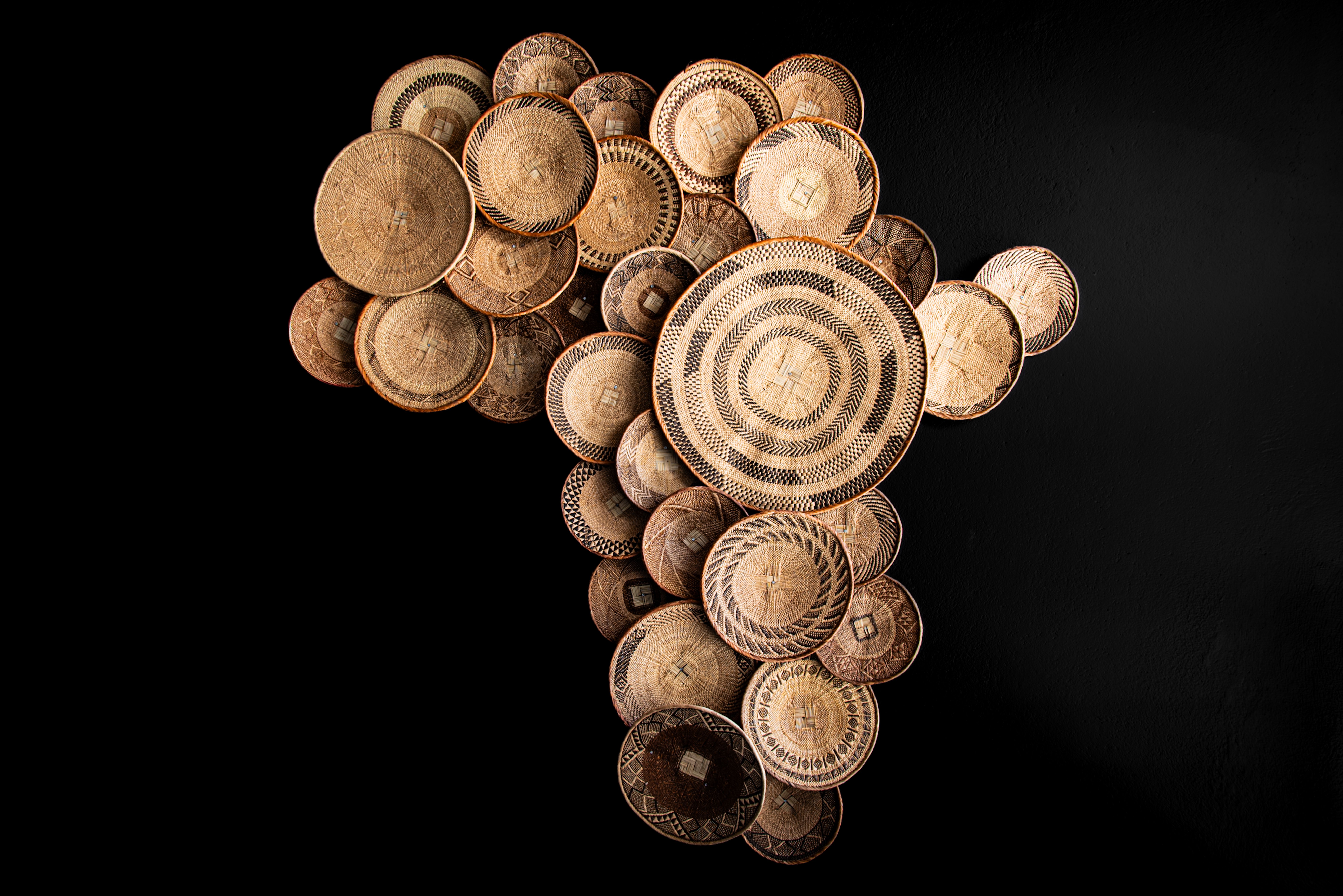
Photo Courtesy of-pexels-magda-ehlers-pexels-37294469.jpg- Many Thanks!
Till we meet again.
Tshego Khatri
A Mirror is a deeper response — 200 words, published alongside the article.
For each and every person I’ve met along this way that started as mere curiosity— May goodness, mercy and grace be with you always. - Tshego Khatri

"It is useful to know that autism often comes along with other things... not by itself." - Kate Currin