

People
Masks & Masquerades
“We all wear masks, and the time comes when we cannot remove them without removing some of our own skin.”

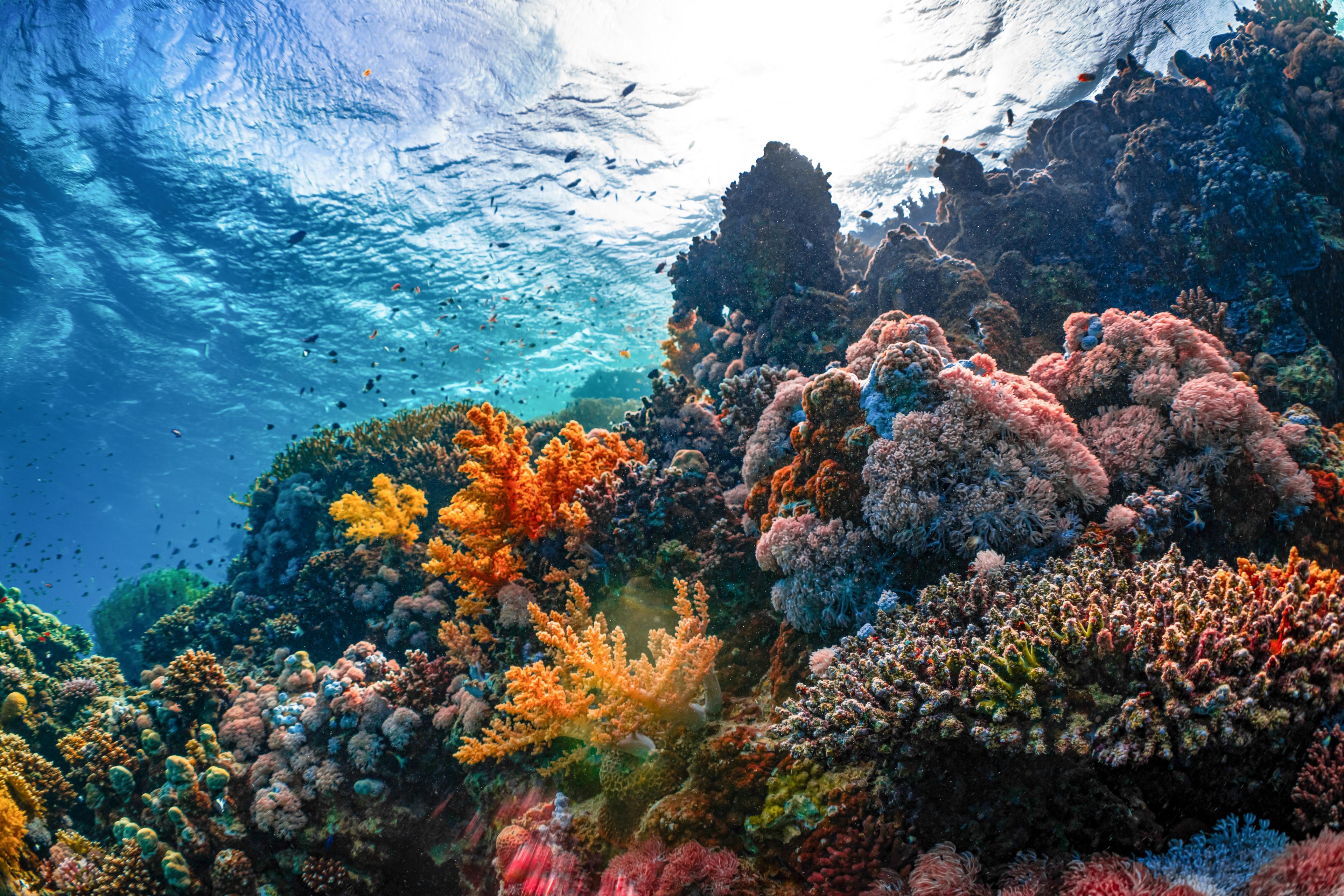
Photo: neom-unsplash- Many Thanks!
Marine Ecosystems in The Cycle of Life
When we say that all life is interdependent and connected, we mean it not only figuratively but quite literally too. Just from a geographical point of view alone, the oceans, rivers, mountains, forests, savannahs, and deserts of this world all have a part to play in the lives of every living creature on the Earth.
Of course, without the Sun that powers Earth’s continued existence, we wouldn’t even be having this conversation. Without the Moon, there would be no movements (tides) in the oceans and seas. The ocean and seas, also referred to as blue spaces, cover two thirds of the planet.
In my city of KuGompo, formerly known as East London, it feels like the ocean is at the crux of life here. We gravitate towards it like a heartbeat of this city, being the third largest in the world. The Indian Ocean runs along the edge of my coastal abode. And on all my trips to that edge, it has exerted its influence over me no matter the emotions running under my exterior. In no time would a soothing sense of calm wash over me. Sometimes a deep sense of contentment even awe if my thoughts ramble and end up running a little too deep.
Let’s unpack a fraction of that awe in a manner that ordinary, lay folk like me and in all hope you, can digest.
At the very bottom of the food chain of life, are the giants of nature in microscopic form primarily classified as phytoplankton. A collective term. They have a powerful part to play in the script of life. True to form, as in other types of ladders, they are fundamentally producers and consumers. These tiny, invisible forms belong in the producers’ circle, laying a profound foundation for the survival of marine life, right up to you, the human being, hence my referral to them as giants.
In school, I was taught that terrestrial plants bore the sole responsibility of the photosynthesis process. I would learn, because I now live here, so late in my years that close to half of all the oxygen the Earth’s organisms need comes from the phytoplankton in the oceans. That of these producers, it’s the phytoplankton that are mind twisters because of their inverse importance relative to their size in the ecosystems of the oceans. They live on the water’s surface, absorb direct sunlight and carbon dioxide, convert them to complex bio-chemical processes that benefit all other marine life.
From there a complex, intricate and intertwined chain of upward events occurs that reaches you and me as we breath in their oxygen to sustain our own complex biological processes.
Without a doubt, our food sources also pretty much depend on these incredible microorganisms through a similar way of complexity that I won’t dive into. At least for now. The point is that their actions reverberate throughout the chain and energy of life.
Next, in the line of producers are macroalgae, commonly referred to as seaweeds. Naked to the eye, they are photosynthetic aquatic plants like the kelp, nori and dulse. Kelp forests are referred to as the “lungs of the ocean” because of their efficiency at producing oxygen. They have a role as habitats for many species, which means they excel at breeding grounds, and in turn, the diversity of life sprouts as a result. They also act as absorbers or sponges of excess nutrients and pollutants, helping to keep and maintain healthy oceanic ecosystems.
The last among the producer organisms are seagrasses. Marine flowering plants found in shallow, clear waters. Known or referred to as benthic primary producers because they live on the ocean floor. Their mind-blowing quality is that, like terrestrial plants, they have roots, leaves and flowering parts, yet thrive in this otherworldly oceanic environment, thanks to the gift of time called evolution.
Their ocean floor is shallow enough for the sunlight’s penetration, allowing for photosynthesis. Seagrass form dense underwater meadows that work in a similar way to prairies. The blades slow down water movement, letting particles settle at the bottom, which then improves the clarity. And therein lies the reason why they are found in clear waters. Seagrasses produce oxygen, provide food for some herbivores like sea turtles and manatees, reduce soil erosion so plants don’t get uprooted, stabilise sediments and store carbon.
The meadows are used as nursery grounds by many marine species, certainly also as a hideaway place from predators by other species. These habitats sway entire ecosystems by how energy moves in a myriad of complex ways.
The inner workings and relationships between all these primary producers show a remarkable collaboration that outlines the interconnectedness of nature. It is complex, and although science has uncovered a lot of nature’s secrets, we’re still out of our depth (pun intended) in marine biology, particularly the deep seas. To give an example of that collaboration, a swelling of phytoplankton in waters rich with nutrients would set off a feeding frenzy across the entire food chain. The waste then recycles the nutrients back into the system and the system self-sustains as long as a delicate, optimal natural balance is maintained.
Britannica defines an ecosystem as a complex unit where a community of organisms interacts with its physical environment. Energy flows through this cycle along the food chain. In the ocean, the phytoplankton gets eaten by the herbivore, which is eaten by the carnivore, then the apex predator caps the chain.
Ecology and geography define ecosystems as a geographic area where organisms, weather, and landscape, work together to form a “bubble of life.”
Within an ecosystem would be producers, consumers, decomposers (bacteria and fungi), living and non-living components.
To imagine the Eastern Cape province with a coastal stretch of 800 km in length, with much less running across the edge of my city. I get to experience the part that only my senses can capture, yet there would be countless ecosystems, living and working their best for life.
If you imagine a marine biologist working for the health of the seas and oceans just like a human biologist does for humanity then you understand just how their importance can’t be overstated. These blue spaces are resource rich, unique and vastly important for keeping everyone and thing healthy. They are the basis for life on Earth.
Marine biologists discover linkages in the marine environment, what they mean and how our negative impacts on these have repercussions on us too. One can say they are ‘bridges between people and the ocean.’
The whole point of having a Marine Aquarium in a city like East London, is to educate the population about marine life. To rescue and rehabilitate marine animals in distress. To communicate with the public about marine events in order to witness and enjoy them. Sometimes to avoid fatalities. To learn more about the interplay between gravity, currents, climate and marine life. And finally, through research and conservation they offer an opportunity to study and gain more understanding of marine life in the cycle of life. After all, Aquariums are miniature oceans
” Facilities where there are animals under human care- wildlife… have changed and are highly conservation and education orientated. People can’t make informed choices if they don’t know what they’re looking at. Exposing them to the wildlife… to win their hearts, you then winning their minds through education. With that comes conservation on a daily basis through choices, then behavioral changes. And that feeds feed right into the conservation of all species. Lessons learnt, understanding and how they live will complement conservation… that whole process is a full circle.
For people that don’t have an opportunity to get into the ocean, to see what that world is about, an aquarium will be a window to the ocean. I wish people could grasp how much we affect marine life with everything we do. It’s not often seen because it’s below the surface.”
- Siani Zahn- Marine Biologist
The discovery of how our own livelihoods on land are tied to that of the blue spaces has been astounding, to say the least.
The ocean is dynamic, alive, breathing, pulsing with countless species of life. As I was writing this, I wondered if that might be why it has such a powerful pull on us. Life attracted to life. My own subconsciousness sensing the same depths and secrets of what lies under the immensity of the biggest orchestra playing the unending symphony of Life. And communing with it.
Till We Meet Again.
"PS: This is a start of a series of different biomes, our impacts on them and duty to shoulder the responsibilities to the story of Life. My many thanks to the Marine Biologist Siani Zahn. And to the Natural Scientist Kevin Cole."
Tshego Khatri
Moved by this story? Share it with someone who needs it.
Leave a Mirror: your response to this piece, a few lines or a few paragraphs. Mirrors we approve are published alongside the article.
“We all wear masks, and the time comes when we cannot remove them without removing some of our own skin.”


“These often unsung heroes understand ... that poverty, disease and famine are just as deadly and destructive as earthquakes, hurricanes and tsunamis."