
Culture
Not Just the Rhyme

I’ve never really wondered if white people think or spend a significant amount of time thinking of their whiteness and how it moves or, more appropriately, must move in the world. I mean, there was always the futility of knowing I’ll never ever know. But it must be said that I’ve never ever had much reason or occasion to also think about my being black in a deep, soul-searching type of way. My soul searches were not consciously tied to the colour of my skin; in fact, I’d be hard-pressed to think of a lane my conscious thoughts expressly and expressively took just to keep and maintain my blackness. After all, all the thoughts that ever ran through my head start with an ‘I’ not ‘I, the black….’
It’s a huge thing, a big deal, what and who introduces you to these complex, layered and nuanced ways of how people view themselves. How people get the pressure to do that, whether they realise it or not. I suppose that would lend itself to a part in how the whole puzzled picture of individual dramas play out, in much the same way as a stone thrown into a body of water creates ripples.
Reflections on the meaning of being black didn't cross my mind until I settled in South Africa. I don't claim that those were never forced into my consciousness as I was growing and progressing in life. I was astonished, perplexed, and in disbelief when I heard the very first time someone openly told me how I was referred to. Their perception of me was the 'white one’. From then on whispers or inferences of being one went into one ear and out the other. It’s extremely hard to put on the lenses for looking at oneself both subjectively and objectively. Also, I instinctively sensed that it was a hopeless cause, I simply didn’t possess the know-how. I was busy exploring who I was in relation to the world, steeped in the self-absorption that’s a hallmark of youth.
In South Africa, the whole colour thing took on a special hue. Whatever lies I prepared myself for—neatly packed theories about race that’d settled in my mind had to go. Everything slowly seeped out to finally burst within a few years of time’s passage and the happenings of life. People here breathe, eat and dance colour. Almost everyone, regardless of their colour. It’s such a palpable thing, insidiously lacing and invisibly directing people’s lives. Anyone sensitive to movements of subtle energies picks it up. The coconut perception followed me here, leaving me reeling with endless questions.
Dumbfounded by the realisation that most black and white people’s lives have never intersected socially left me wondering how they could possibly judge me. How many white people have spent a day in an average, ordinary home of a black family? Conversing, participating as guests, sharing meals and being entertained? In reverse, how many black people would say the same—not as employees but as proper guests? Not for cultural shows like weddings or funerals? Of course, in time the answer was simple, as it always has been.
It’s because different pockets of people across race and class live and occupy spaces in completely different bubbles that hardly ever touch beyond the necessary, deeply embedded, orchestrated bumps. The country , with an infant democracy, has the mammoth task of erasing and redressing the lingering effects of one of history’s deliberate inequality tragedies. [In truth, the policies in place to achieve this goal leave much confusion, bitterness and an identity crisis that seems to only grow more entangled instead of less.]
When my time to attend a funeral in support of two sisters who had untimely lost a family member to death came, I walked to the chapel service, for it was in my neck of the woods. I couldn’t help sending a text message to ask if there was a particular way of dressing. The very first Afrikaner funeral experience of my life, exercise in caution was not a bad idea. But, as the only black person there, it felt utterly strange in a manner akin to an out-of-body experience.
The person whose memorial service it was—a business owner who had hired predominately black workers —surely one could have attended on behalf of the rest?
When I had to catch a lift with one of them for the tea, cakes, and finger foods at their home as was explained to me, the strangest of things happened. I headed for the gate and walked right out. I didn’t think about it and certainly never thought or planned to do it at any point during the service. My legs just walked me right back home. A text would come, asking me where I was and what happened to me. The reply was that I thought to give them space, and condolences were once again passed on. That was the last time to ever see either girl again. To this day, I’ve no explanation for my actions except that life is stranger than fiction.
With ‘my own’ people forcing me to question my right or worth of being black, it became one of the catalysts toward a meltdown. Even as I did so, (melt) looking to find which parts of being black I lacked, misplaced or lost sounded so incredibly absurd to me. I used to laugh till I cried. Wondering if the disconnection felt deep inside was because I forgot who I was. I desperately retraced my steps to a place where I’d find my blackness.
Time and again, I’d be awestruck at how the people who were judging me are the women who put on long, synthetic hair in colours that naturally belong on white heads.
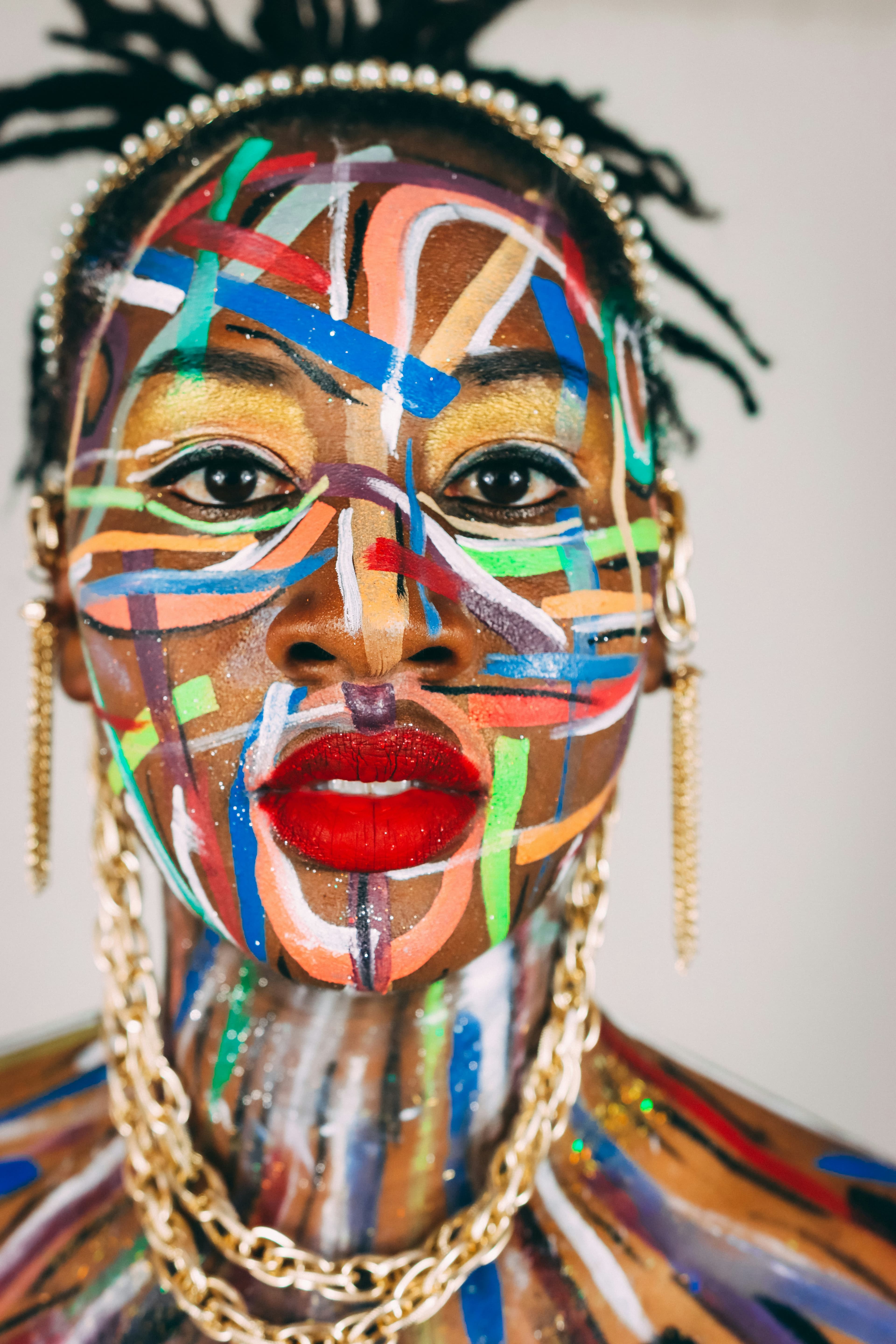
Who painted their faces in colours foreign to their black faces and wore vividly labelled clothes and accessories on their bodies with origins in the far-flung continents of the world. Women who stuck fake eyelashes and nails onto their body parts and looked so uncomfortable in their own skins down to their feet because sexy was now tight and wore inches-long stilettos. Women and girls who danced as if the entire world were in their bedrooms
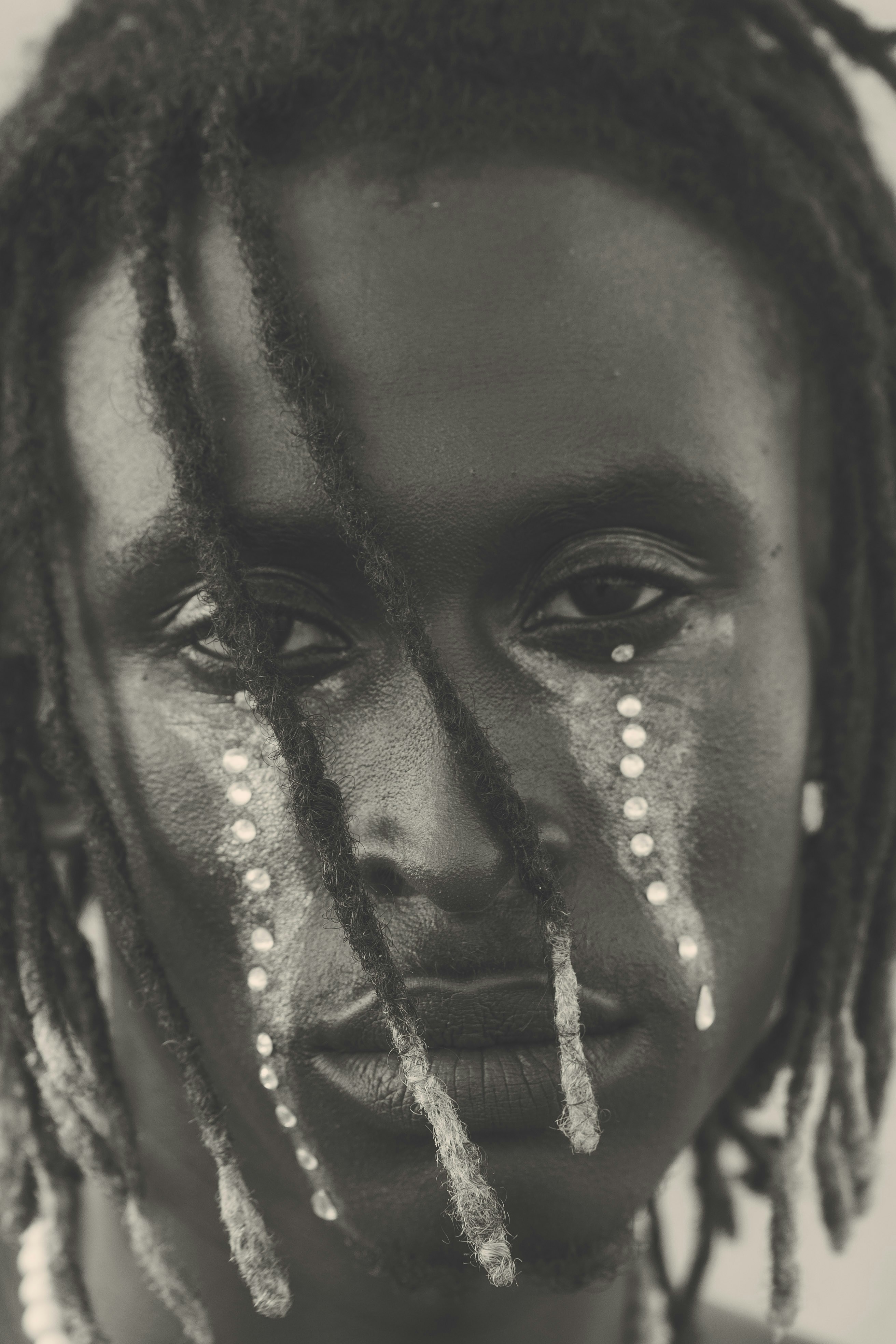
Photo Courtesy of- christian-agbede-HyR8slhv6WA-unsplash.jpg- Many Thanks!
I was judged by men who preferred to have such women hanging on their arms. Not anyone who looks like me by a long shot. The only reason I didn’t look like that was simple—I love being comfortable from head to toe. None of those men would come within a mile of me.
People who bought and drove European cars, which they used as a yardstick to scale each other up. Why didn’t they design their own ‘African’ cars and most material things to match their correct, pompously abstract, conveniently selective blackness and pride?
The only thing that has happened is that black people in these parts of the world have conflated and compounded success and culture with that of the black American hip hop/pop one. Anyone not taking on that mantle is left by default in the rest of the world. The rest of the world, in case the hip-hopped black people haven’t noticed, is still run by the Western culture and systems.
The coconut in me, as it observed all the people described above, was simultaneously aware that only a part of my brain was simply voicing out one of the biggest riddles of my lifetime. There’s no care at all from me about what people choose to do in and with their lives. I don’t lose sleep at night over that. To me, the most important thing is finding a purpose in life, for life.
As for the white people and bosses who disturb my cool when they manage to come up with annoyingly belittling comments that they confuse with compliments—will I spend a lifetime huffing and puffing every time those come my way?
“You’re not black, just on the outside.”
“When I’m with you, I forget you’re black.”
When mistakes happen in interactions between people of different races, pre-conceived notions are quick to replace rationality and they usually escalate tensions. Once, at a restaurant for breakfast with my boyfriend, we placed an order, but because we’d picked different things off the menu, his plate would be ready before mine. Near fainting because of hunger, we explained that they should scrap the etiquette.
A white family would come shortly after. The lady boss, old and cheerful, mistakenly delivered my plate to their table. I watched, baffled, as that whole group was eating, my boyfriend done, and I was still waiting. Just as I was about ready to mount a verbal attack in reflexive mode, the white lady glanced my way. A waiter seemingly pointed out the blunder. The fleeting emotion her eyes and face portrayed a fear and panic so plainly etched. I felt an apology by the softening of her eyes.
I relaxed my entire body as she profusely apologised and explained that it was a genuine mistake. Somehow, I hoped that the smile I drew would ease the evident conflict and self-battery she was still waging inside. Body language never fails to profoundly impress me. When tongues tie up or speech sticks at the back of our throats, body language conveys at lightning speed.
She brought a plate of deliciously tempting miniature koeksisters, dipped in syrup and sprinkles of sugar crystals. They were accompanied by a beautiful comment, all on the house. My first instinct was to offer my thanks in rejection because I so consciously guarded what I ate. My second was to accept and eat it in recognition of what it was. A peace offering. If it were my grandmother, I’d be grateful no doubt for any stranger extending the same hand of forgiveness. And grace to her.
In a world of horrific pasts and injustice. Pillage and deep generational wounds that accrue rage. Human error, flawed, confused people. Evil, cruel people, personal tragedies. And the entire collective epic saga that is humanity’s story. I want to live in a world where we make connections in the only way that truly matters. Inside. From whence all else will follow. Proving anything to anyone besides myself is too tedious a way for me to move through the world. It leaves me with little leftover energy for other demands of life.
I made my own, innate connections within myself through healing. Trying to prove how black I was to a blanketed majority of others who looked like me, didn't work. It was similar to wanting to propel myself to outer space.
It’s only within the depths of who we are that we find the true compass that helps the navigation of life. Our own individual stars that God placed in each of our hearts… to guide us through the endless loops of life.
Tshego Khatri
A Mirror is a deeper response — 200 words, published alongside the article.
For each and every person I’ve met along this way that started as mere curiosity— May goodness, mercy and grace be with you always. - Tshego Khatri

"It is useful to know that autism often comes along with other things... not by itself." - Kate Currin