
People
The Unsung Heroes
“These often unsung heroes understand ... that poverty, disease and famine are just as deadly and destructive as earthquakes, hurricanes and tsunamis."
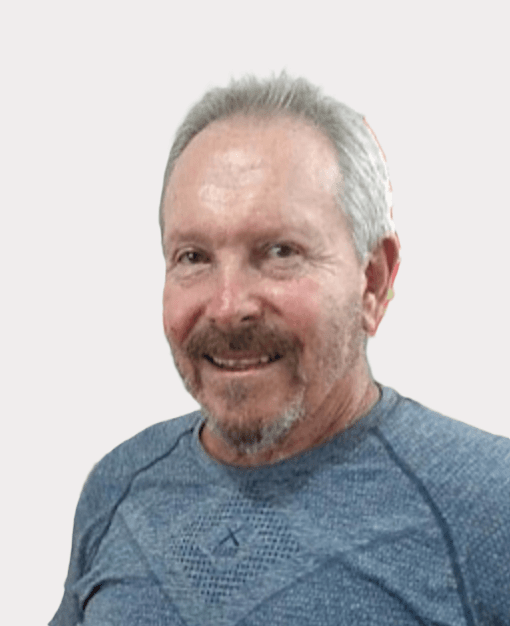
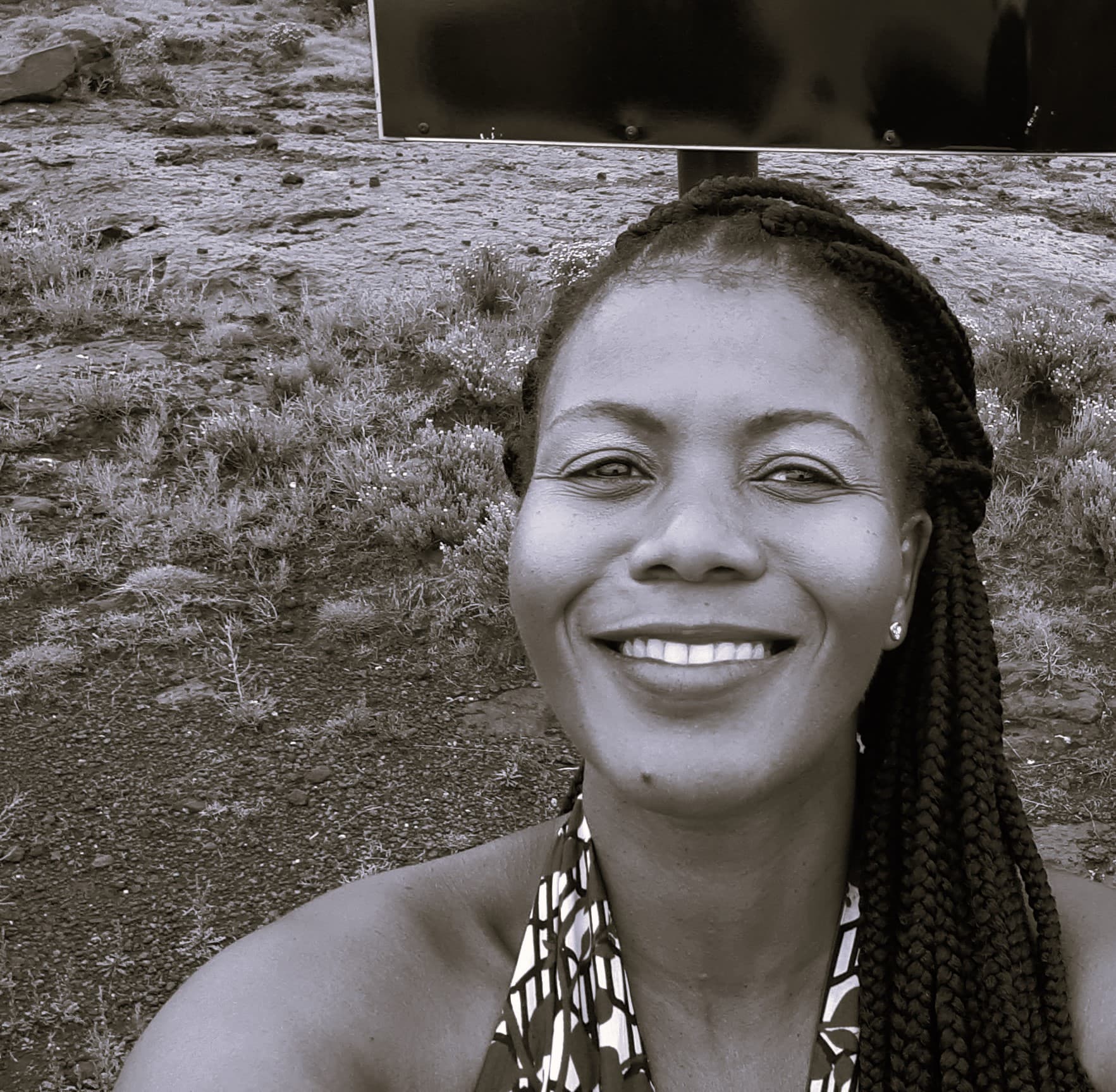

At Autism Sinethemba, which rents its classroom buildings behind the Roman Catholic Cambridge Parish, Cameron Salzwedel was waiting on a rainy morning for me to turn for up the conversation we had set aside to speak of autism. And to try out best to unravel what it is.
Sinethemba is an Early Intervention Centre, and has, for 18 years now, been working and helping autistic children find their bearings in the world. At the time we were engaging, they had an enrolment of 28 children, which made for 4 classes. It’s much easier to keep them small for obvious reasons. The age ranges between 3 to 12 years and in grouping them both affinities of age and abilities are taken into consideration.
Chatting with Cameron Salzwedel, the Educare Centre’s Manager, she explains that they are an NPO that relies solely on donations, unfortunately they haven’t made it yet to the government’s purse. Like many things in life, early intervention makes a whole lot of difference in these children’s lives and goes without saying their families too and society at large.
When I asked Cameron if she could explain her understanding of what autism is, she simply said, it’d be easier to speak of her experiences as a mother of two autistic children. What she knows for sure is that every single autistic child is different from the other.
“These children are supper different— special interests, ways, sensory issues, needs, dietary issues.”
When I asked her if she’d classify them as special needs children, she said yes,
“Because most of them wouldn’t be able to able to go into the mainstream schooling system. Some are able to, but most of the children that come through here are not able to go through mainstream.”
“They learn differently, take longer to and so tasks here are broken down and simplified so much for them.”
Sinethemba uses the Makaton— a unique programme that uses not only speech but pictures and gestures to enable communication. Because cases differ, not only in severity but spectrum too, Makaton comes in handy for both the children and those around them. It is different from what is called Sign Language for the Deaf.
About her own experience, her son was 3 years old when she was told by his teachers that he didn’t play with other children, couldn’t communicate and most importantly didn’t make eye contact with anyone. She said,
“Well, he does with me.
“Yes, because you’re his safe place.”
The founder of Sinethemba Centre, Antonette Alexander is how they met. She advised her to get an appointment at the Frere Hospital with Dr Haper. Her son didn’t like having his hair washed, nails cut, teeth brushed, wearing shoes or clothes. He was fussy with food and eating and has a specific toy he stuck to.
The diagnosis came out as autistic. They would also find out about his dyslexia. He was enrolled at Sinethemba, went through 12 years of his schooling there and is now a student at College Street, doing as well as well can be.
With her little girl, she wasn’t sure whether she could be autistic or not but took her to the doctor for an assessment. She was tippy-toing, flapping a lot, hyperactive with delayed speech. On the autism Spectrum she is diagnosed as highly functioning with an additional condition called Pica. Eating objects and inedible stuff like soap, washing power, glue, cardboard. You get the picture. It’s classified as an eating disorder and is not uncommon in people with autism
She had to take melatonin to activate sleep in her brain, without which her brain wouldn’t shut down on its own. Thankfully, time has been kinder because she’s sleeping without the melatonin now. Her daughter is doing just fine at mainstream school.
Cameron is an Early Childhood Development teacher and has over the years kept enhancing her education and understanding with ongoing training and courses; Autism; Behaviour; Makaton Training and every new information that could be gleaned on how to work with these children.
The class is lively, loud and a repetition of so many words from one boy are seemingly random, except they rhyme. I tell her that I notice boys make up the most of it, are boys predisposed to it?
Her answer is that autism seems to be more noticeable in boys than it is in girls who learn to mimic and mask, hence learn coping mechanisms.
There’s an array of preferred texture in food in her classes from mushy, plain, bland, white meat. No sauces, sauces but a general favourite are starches; white rice, noodles, pasta, bread. But all the boys and girls are without exception foodies of McDonald’s, and they can spot the logo miles away! I find that quite fascinating- secret ingredient nugget tickles!
Once again, I’d hear about ‘inclusive’ education that the government is planning to roll out. Cameron is so worried. She says,
“Just imagine, 40 learners in a class and, Musa is busy scratching in his pants and Little Mary goes home and tells her mom.
What is the teacher going to do because Mary’s mom doesn’t understand autism?”
Next, I got in touch with Kate Currin, a Specialist Wellness Counsellor, Life Coach and together, with her colleague Claire Macdonald, founded ELAN – Empowering Lives, Affirming Neurodiversity.
“My caveat to this is that autism is an extremely complex (and sensitive for many) topic so it isn't actually easy to answer seemingly simple questions. Even within the autism community we find there are often differences to how people see things, and we are actually still learning about autism and neurodiversity, and I believe we will continue to do so for a very long time.”
Says Kate Currin.
As usual, below, are a few questions she took the time to answer.
Is it a condition or a disease? Or how would you classify it?
As I said above, I prefer to see it as a neurological difference not a disease or condition as such.
2. Please explain what this spectrum we hear about is? Can we understand it like we were taught about the rainbow in school?
The spectrum is a very interesting topic. Before, the spectrum was largely viewed by society as a straight line which illustrated people as being "more" or "less" autistic depending where they fell on this line. I prefer the view of the spectrum as being a circle which is broken up into various key functional areas like social communication and sensory processing instead of a straight line. This, in my understanding isn't an official version used by medical professionals when diagnosing or assessing autistic individuals, but I think it gives us a really good picture as a society of how the spectrum can look. A key part of this is that every autistic person has their own combination of strengths and challenges. Their support needs in these areas therefore will also vary accordingly from needing more to less support in different areas. What I have discovered in my work and family life is that this picture can also change from day to day or moment to moment depending on what else is happening in the person's life at the time. As I said, in my opinion, there is no one answer that encompasses everyone neatly because we are all different.
3. And the terms— "neurotypical and neurodivergent" how are we to de-mystify them?
I think these terms relate to how a person relates to and processes their world. In my opinion, a neurotypical person would be more likely to follow and understand social norms and learn and react to things like sensory stimuli in the way that the majority does.
A neurodivergent person's brain works in a bit of a different way, and their actions and reactions might not always be what society expects of them. Certain things may need to be taught more explicitly. In the autistic community, a good example of this is how we teach autistic people about social communication. A real-life example I can give is how we had to teach my son that, socially, people expect you to just say thank you when they give you a gift even if you don't like it or already have it. Usually, he would just respond in a very straightforward and honest manner without realising that most people expect him to take "social niceties" into account and this would often upset people who didn't understand him.
What I would like to emphasise here is that I don't consider neurodivergence simply to be only deficits but rather natural variations in people's brains. I think it can be beneficial for everyone when we can tune in to other people's ways of seeing and experiencing things with understanding and acceptance and not judgement.
4. What do you know about Autism for sure?
I know that every autistic person is an individual and can't be neatly packed into a box. Each person has their own set of support needs, strengths, challenges and personality. I know that every autistic person is valuable and should be respected and treated with dignity and love no matter how their autism presents.
5. What is the number one thing you wish people knew about Autism?
I think this is a really difficult question to answer because there are many things I wish people knew! I think probably the top ones I would like people to understand is that non-verbal doesn't mean no communication and that autistic people are capable of love and empathy, these things might just be shown in different ways to what we are used to as a society and we need to learn to listen.
6. How are we to socially or respectfully refer to autistic people? (Do we even use caps or small letters?)
Another tough one as this can vary from person to person. Some people will say that they or their child has autism while others will say they are autistic. In our community, referring to someone as an autistic person or autistic seems to work well for most people. I think the key thing again though is to remember that people are their own people and have different preferences so proceeding with respect and love is always the best route.
7. What would your descriptions be about;
a) The different, opposite sides of the spectrum?
b) The different presentations and why there would be, if any between boys and girls?
a) In light of the way I view the spectrum, I wouldn't say that there are exactly polar opposites. I think that people can have more or less support needs. Some people, for example, may be able to express themselves verbally very well while others might need a device or sign language to help them communicate. Another example can be toilet training. Some people may be able to learn to read and react to their body's need to use the toilet at a relatively young age while others may continue to wear nappies or pads into adulthood. I think the same idea can be applied to all the generally accepted key functional areas presented on the spectrum wheel.
8. What don’t you know for sure about Autism?
I don't know for sure whether we will ever be able to fully understand dispel the myths and remove the stigma around autism, but our hope is to educate as many people as possible and make the world a more inclusive place for us all!
“At ELAN, we believe that every autistic person deserves to feel understood, respected and included in their community. Our mission is to build greater awareness, equip organisations with practical knowledge, and help create environments where autistic people and their families can participate with dignity and confidence.
I'm also the mum of two neurodiverse children so autism is part of our daily life at home!”
Says Kate Currin.
My thanks to Antoinette Alexander, Cameron Salzwedel, Kate Currin and, once again, to Katherine Herman who put me in touch with all these wonderful women, who do wonderful, amazing and important work.
"I will never forget my first encounter with Cameron. Two, three or more children were hanging somewhat, somehow on her body. They all looked at home. With one another.
... often, it's images that generally imprint much more than words could ever hope to impress."
Tshego Khatri
A Mirror is a deeper response — 200 words, published alongside the article.
“These often unsung heroes understand ... that poverty, disease and famine are just as deadly and destructive as earthquakes, hurricanes and tsunamis."
“A sermon is a place to wake people up to realities they have assented to with the mind but have not grasped with the heart.”